
GHK-Cu and Modern Skin Renewal
A grounded guide to copper-peptide skin care, realistic expectations, formulation questions, and a simple routine that protects the basics.
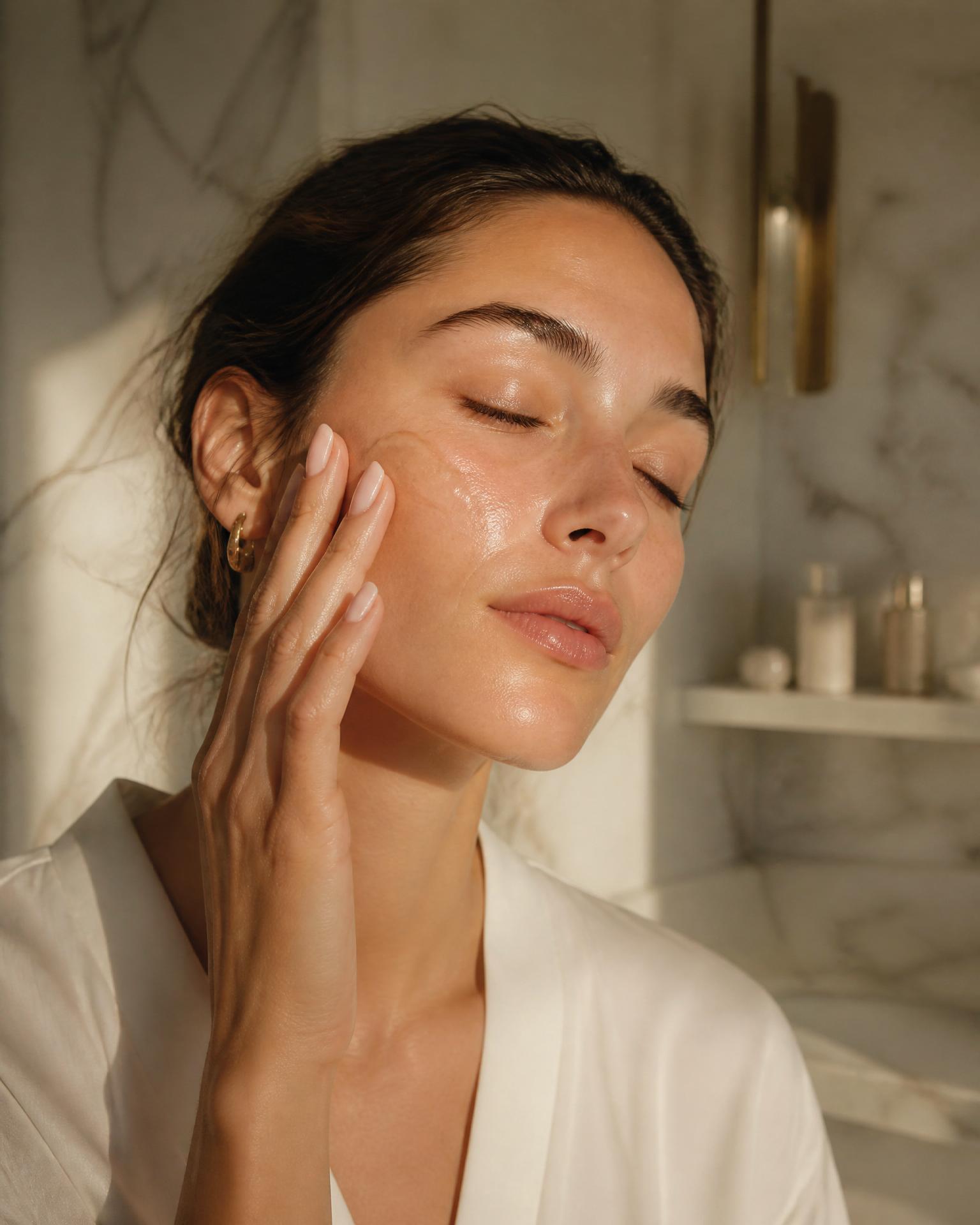
Modern skin renewal does not have to mean chasing a dramatic before-and-after. GHK-Cu is a copper-binding peptide used in some topical formulas and studied for its role in skin remodeling and repair. The science is interesting, but the finished formula, your routine, and realistic expectations matter more than an ingredient trend alone.
GHK-Cu, in plain English
GHK is a small peptide that can bind copper, forming the complex commonly called GHK-Cu or copper tripeptide-1. Laboratory and preclinical research has explored its effects on collagen-related processes, inflammation, antioxidant activity, and wound repair.
A topical cosmetic containing GHK-Cu is different from an injectable product. Concentration, stability, packaging, delivery into skin, and the rest of the formula all influence the experience. Evidence about one finished product cannot automatically validate every serum or cream with copper-colored branding.
What the evidence can support
Reviews describe plausible skin-remodeling activity and some encouraging topical findings. At the same time, much of the published literature is laboratory, animal, mechanistic, small, older, or tied to specific formulations. That supports measured interest—not guaranteed wrinkle reversal or scar erasure.
One controlled study of a topical copper tripeptide complex after laser resurfacing did not find significant improvement in wound healing compared with control care. Results like this are a useful reminder that a compelling mechanism does not ensure a visible clinical effect in every setting.
What you may notice
With a well-tolerated topical routine, the first changes may be simple: skin feels more hydrated, comfortable, or smooth. Changes in texture or the appearance of fine lines, if they occur, take consistent use and are usually gradual.
Redness, stinging, itching, or breakouts can happen with any new topical. Introduce one product at a time and consider a patch test. Stop and seek guidance if irritation is persistent, severe, or accompanied by swelling or hives.
Who might discuss it with a clinician
Someone looking for a gentle, supportive topical may ask a dermatologist or clinician whether a copper-peptide formula fits alongside sunscreen, moisturizer, retinoids, acids, vitamin C, or prescription treatments.
Professional advice is especially useful for active dermatitis, rosacea, allergies, a damaged skin barrier, pregnancy-related routine changes, recent procedures, or a history of reacting to multiple products. A clinician can help simplify the routine before adding another active.
Build the routine around the basics
Use a gentle cleanser if needed, a moisturizer that supports your skin barrier, and broad-spectrum sunscreen every morning. Introduce GHK-Cu according to the finished product's directions rather than combining multiple new actives at once.
Take photos in the same lighting every four weeks if you want to evaluate change. Daily mirror checks are heavily influenced by hydration, light, sleep, and expectation. A simple routine used consistently is easier to assess.
- Start a few times a week if your skin is reactive
- Apply only as directed by the finished product
- Add one new active at a time
- Use broad-spectrum sunscreen every morning
- Reassess comfort and visible change after eight to twelve weeks
A calm safety and formulation check
Topical cosmetics and injectable compounded products belong in different safety conversations. FDA has specifically identified injectable GHK-Cu among compounded bulk substances with limited human safety information and potential immunogenicity and impurity concerns.
Do not use topical evidence to justify injection. For any product, ask for the full ingredient list, directions, storage, manufacturer or dispensing source, and what to do if a reaction occurs. Skin changes that are painful, bleeding, rapidly changing, or medically concerning deserve examination rather than cosmetic self-treatment.
Frequently asked questions
Is GHK-Cu the same as copper tripeptide-1?
Copper tripeptide-1 is a cosmetic ingredient name commonly used for the GHK-copper complex. Finished products can still differ in concentration and formulation.
Can I use GHK-Cu with retinol or vitamin C?
Compatibility depends on the finished formulas and your skin. Introduce products slowly and ask a dermatologist if your routine is active or irritation-prone.
How long does GHK-Cu take to work?
There is no guaranteed timeline. If a topical helps, comfort or hydration may be noticed before gradual texture changes. Assess over weeks, not days.
Is injectable GHK-Cu proven for skin renewal?
No. Human safety and effectiveness data for injectable GHK-Cu are limited, and FDA has identified potential safety concerns for compounded injectable use.
Medical sources
- 01Topically applied GHK as an anti-wrinkle peptideSkin Pharmacology and Physiology · 2024
- 02The potential of GHK as an anti-aging peptideBiomedical Pharmacotherapy · 2022
- 03Effects of topical copper tripeptide complex on CO2 laser-resurfaced skinArchives of Facial Plastic Surgery · 2006
- 04Certain Bulk Drug Substances for Use in Compounding That May Present Significant Safety RisksU.S. Food and Drug Administration · 2026
Treatment requires clinician evaluation. Education does not establish eligibility or guarantee a prescription.